
| Choose the correct option: |
| (i) Wild buffalo is an endangered species because |
| Choose the correct option: |
| (ii) The thread-like structures present in the nucleus are: |
| Choose the correct option: |
| (iii) After fertilisation, the resulting cell which gives rise to a new individual is the: |
| Choose the correct option: |
| (iv) Structure present in the cell which is responsible for determination of the sex of a baby is: |
| Choose the correct option: |
| (v) Adrenaline is produced by the: |
| Choose the correct option: |
| (vi) An object is vibrating at 50 Hertz. What is its time period? |
| Choose the correct option: |
| (vii) Which one of the following solutions will not conduct electricity? |
| Choose the correct option: |
| (viii) Major earthquakes are likely to occur in: |
| Choose the correct option: |
| (ix) Which of the following is NOT a member of the solar system? |
| Choose the correct option: |
| (x) Sun appears to move from east to west around the earth. This means that earth rotates from: |
| Hydrochloric acid is taken in a test tube and a piece of zinc metal is put into it. The collected gas evolved in the test tube is tested by bringing it near the burning matchstick. |
| (a) Which is the gas evolved in the test tube after the reaction? |
| (b) What happened to the burning matchstick when it is brought near to the mouth of the test tube. |
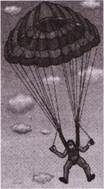
| Fig. shows a man with a parachute. Name the force which is responsible for his downward motion. |
| Will he come down with the same speed without the parachute? |
 |
| Column A | Column B | ||
| (a) | Protozoa | (1) | Nitrogen fixation |
| (b) | Rhizobium | (2) | Root nodules |
| (c) | Legume | (3) | Paramecium |
| (4) | Curd formation |
| Categorize the following materials into 'can be recycled' and 'cannot be recycled' : |
| Telephone instruments, toys, cooker handles, carry bags, ball point pens, plastic bowls, electric wire covering, plastic chairs and electrical switches. |
| Observe the following figures. | |
(a) 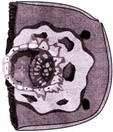 | (b) 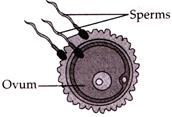 |
(c) 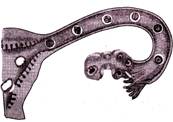 | (d) 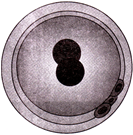 |
| (i) Identify the stages (a) to (d) in figures during development of human baby. | |
| (ii) Arrange the stages in correct sequence of development. | |
| (iii) Explain the development that takes place in any one stage. | |






You need to login to perform this action.
You will be redirected in
3 sec