

A) The time of flight of each particle is the same
B) The particels will collide the plane with same speed.
C) Both the particles strike the plane perpendicular.
D) the particles will not collide in mid air even if projected simultaneously and time of flight of each particle is greater then the time of collision.
Correct Answer: A
Solution :
Since their relative velocity is along the line joining them and relative acceleration is zero hence they collide when their time of flight is greater then time of collision. Here \[\beta =2\theta ,\,\,\beta =\theta \] Time of flight of A is, \[{{T}_{1}}=\frac{2u\sin (\alpha -\beta )}{g\cos \beta }\] \[=\frac{2u\sin \,(2\theta -\theta )}{g\cos \theta }\,=\frac{2u}{g}\,\tan \theta \] Time of light of B is, \[{{T}_{2}}=\frac{2u\,\sin \theta }{g\,\cos \theta }\,=\frac{2u}{g}\tan \theta \]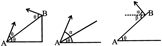 So, \[{{T}_{1}}={{T}_{2}}\]. The acceleration of both the particles is g downwards. Therefore, relative acceleration between the two is zero or relative motion between the two is uniform. The relative velocity of A w.r.t. B is toward AB, therefore collision will take place between the two in mid air.






You need to login to perform this action.
You will be redirected in
3 sec