
 The Union Home Ministry has excluded 29 inhabited islands in Andaman and Nicobar from Restricted Area Permit (RAP) regime under the Foreigners (Restricted Areas) Order, 1963 till December 2022. This decision aims to increase footfalls and promote tourism. Government is also planning to open 11 other uninhabited islands to foreigners. The lifting of RAP will allow foreigners to visit these islands without prior permission from the government. However, citizens of Afghanistan, China and Pakistan and foreign nationals having their origin in these countries will continue to require RAP to visit Union Territory. Moreover, for visiting Mayabunder and Diglipur islands, citizens of Myanmar will also continue to require RAP, which shall be issued only with prior approval of Home Ministry. Besides, separate approvals of competent authority will be required for visiting reserved forests, wildlife sanctuaries and tribal reserves. The Union Home Ministry has excluded 29 inhabited islands in Andaman and Nicobar from Restricted Area Permit (RAP) regime under the Foreigners (Restricted Areas) Order, 1963 till December 2022. This decision aims to increase footfalls and promote tourism. Government is also planning to open 11 other uninhabited islands to foreigners. The lifting of RAP will allow foreigners to visit these islands without prior permission from the government. However, citizens of Afghanistan, China and Pakistan and foreign nationals having their origin in these countries will continue to require RAP to visit Union Territory. Moreover, for visiting Mayabunder and Diglipur islands, citizens of Myanmar will also continue to require RAP, which shall be issued only with prior approval of Home Ministry. Besides, separate approvals of competent authority will be required for visiting reserved forests, wildlife sanctuaries and tribal reserves. |
|
 Government has doubled import duties on 328 textile products to 20% from existing rate of 10% under Section 159 of the Customs Act, 1962. Earlier in July 2018, Government had doubled import duty on over 50 textile products — including jackets, suits and carpets to 20%. Government has doubled import duties on 328 textile products to 20% from existing rate of 10% under Section 159 of the Customs Act, 1962. Earlier in July 2018, Government had doubled import duty on over 50 textile products — including jackets, suits and carpets to 20%. |
|
|
 According to recent study released by LIRNEAsia, India has highest gender gap in mobile phone ownership amongst 18 comparable countries and ranks among the lowest in women’s access to Internet. LIRNEAsia is an information and communications technology (ICT) policy think tank that is involved in pro-poor, pro-market research in Asia-Pacific since 2005. The study also included comparative research done by ICT Africa in Africa and DIRSI in Latin America. According to recent study released by LIRNEAsia, India has highest gender gap in mobile phone ownership amongst 18 comparable countries and ranks among the lowest in women’s access to Internet. LIRNEAsia is an information and communications technology (ICT) policy think tank that is involved in pro-poor, pro-market research in Asia-Pacific since 2005. The study also included comparative research done by ICT Africa in Africa and DIRSI in Latin America. |
Key Highlights of Study
|
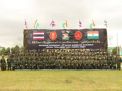 Exercise 'Maitree' is a joint military exercise between Indian Army and Royal Thai Army which is running on in Thailand. It is a platoon level exercise which comprises of infantry component. The exercise will emphasize to hone the tactical and technical skills in joint counter insurgency and counter-terrorist operations in the rural and urban scenario under UN mandate. Exercise 'Maitree' is a joint military exercise between Indian Army and Royal Thai Army which is running on in Thailand. It is a platoon level exercise which comprises of infantry component. The exercise will emphasize to hone the tactical and technical skills in joint counter insurgency and counter-terrorist operations in the rural and urban scenario under UN mandate. |
| Source- Press Information Bureau (PIB) |
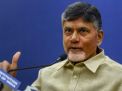 The world's first-ever thermal battery plant was unveiled in Andhra Pradesh by the state’s Chief Minister N Chandrababu Naidu. Manufactured by the Bharat Energy Storage Technology Private Limited (BEST), the first-of-its-kind batteries will aim to boost renewable sources of energy production and reduce the dependence on non-renewable fossil fuel-based energy generation. The technology, which will help in mitigating carbon emissions, is best suited for grid balancing and stabilisations. It will also be used to store energy for telecommunication, commercial establishments, electric vehicles and highway charging stations. The world's first-ever thermal battery plant was unveiled in Andhra Pradesh by the state’s Chief Minister N Chandrababu Naidu. Manufactured by the Bharat Energy Storage Technology Private Limited (BEST), the first-of-its-kind batteries will aim to boost renewable sources of energy production and reduce the dependence on non-renewable fossil fuel-based energy generation. The technology, which will help in mitigating carbon emissions, is best suited for grid balancing and stabilisations. It will also be used to store energy for telecommunication, commercial establishments, electric vehicles and highway charging stations. |
| Source- The Indian Express |
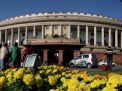 The 123rd Constitutional Amendment Bill giving constitutional status to the National Commission for Backward Classes (NCBC) has got Parliamentary assent. It will give the institution all powers to safeguard the rights of the socially and educationally backward classes and fulfils a long pending commitment of the central govt to the OBCs. The 123rd Constitutional Amendment Bill giving constitutional status to the National Commission for Backward Classes (NCBC) has got Parliamentary assent. It will give the institution all powers to safeguard the rights of the socially and educationally backward classes and fulfils a long pending commitment of the central govt to the OBCs. |
|
123rd Constitutional Amendment Bill Explained:
|
| Source- DD News |
 The National Handloom Day is being observed every year on 7 August to honour the handloom weavers in the country and also carter an impetus to India’s handloom industry. This year it was the 4th edition of the National Handloom Day after it was instituted in 2015. The celebration of the day seeks to highlight the contribution of handloom to the socioeconomic development of the country and promote handlooms to increase the income of weavers and also enhance their pride. The National Handloom Day is being observed every year on 7 August to honour the handloom weavers in the country and also carter an impetus to India’s handloom industry. This year it was the 4th edition of the National Handloom Day after it was instituted in 2015. The celebration of the day seeks to highlight the contribution of handloom to the socioeconomic development of the country and promote handlooms to increase the income of weavers and also enhance their pride. |
| Source- The Hindu |
 Saudi Arabia has announced that it is freezing all new trade and investment with Canada over its interference in its internal affairs. The Saudi foreign ministry expelled the Canadian ambassador and recalled its own envoy in Canada. Saudi Arabia has announced that it is freezing all new trade and investment with Canada over its interference in its internal affairs. The Saudi foreign ministry expelled the Canadian ambassador and recalled its own envoy in Canada. |
| Source- AIR World Service |
 Italian motorcycle-maker Benelli signed an MoU with Telangana government and Adishwar Auto Ride International (AARI) for setting a manufacturing facility. The group company would initially start assembling CKD (completely knocked down) kits of the bike for Benelli to assemble, manufacture bikes and import exclusive range of the bikes from Italy and SouthEast Asian regions. Italian motorcycle-maker Benelli signed an MoU with Telangana government and Adishwar Auto Ride International (AARI) for setting a manufacturing facility. The group company would initially start assembling CKD (completely knocked down) kits of the bike for Benelli to assemble, manufacture bikes and import exclusive range of the bikes from Italy and SouthEast Asian regions. |
| Source- DD News |
 The nominating committee of Internet Corporation for Assigned Names and Numbers (ICANN) has selected Ajay Data, Founder & CEO of Data XGen Plus and a global leader in email linguistic services, as a new council member of Country Code Supporting Organisation (ccNSO). Ajay Data is the first Indian to have been selected as a member of ccNSO and will be representing India at a global level. He will be the custodian of Asia, Australia and Pacific Islands as a member of ccNSO. Data has got a two-year term and will take up the position during ICANN 63 Meet in Spain in October 2018. The nominating committee of Internet Corporation for Assigned Names and Numbers (ICANN) has selected Ajay Data, Founder & CEO of Data XGen Plus and a global leader in email linguistic services, as a new council member of Country Code Supporting Organisation (ccNSO). Ajay Data is the first Indian to have been selected as a member of ccNSO and will be representing India at a global level. He will be the custodian of Asia, Australia and Pacific Islands as a member of ccNSO. Data has got a two-year term and will take up the position during ICANN 63 Meet in Spain in October 2018. |
| Source- The Indian Express |





You need to login to perform this action.
You will be redirected in
3 sec