
 The Indian Army will sign MoU with Russia to procure AK-203 assault rifles. According to the deal, around 1 lakh rifles are to be received directly from Russia and the rest will be manufactured in India The Indian Army will sign MoU with Russia to procure AK-203 assault rifles. According to the deal, around 1 lakh rifles are to be received directly from Russia and the rest will be manufactured in India |
|
|
 The Marine Ecosystems-Challenges and Opportunities (MECOS), the third international symposium is to be held in Kochi. The symposium is conducted by the Marine Biological association of India between January 7, 2020 and January 10, 2020. The Marine Ecosystems-Challenges and Opportunities (MECOS), the third international symposium is to be held in Kochi. The symposium is conducted by the Marine Biological association of India between January 7, 2020 and January 10, 2020. |
|
|
 According to the recent census at the Bhitarkanika National Park, the population of salt water (or estuarine) crocodiles have increased to 1,757 as compared to 1,742 in 2018. According to the recent census at the Bhitarkanika National Park, the population of salt water (or estuarine) crocodiles have increased to 1,757 as compared to 1,742 in 2018. |
|
|
 In January 2020, a turtle rehabilitation Centre is to be set up in Bihar’s Bhagalpur forest. The centre will shelter more than 500 turtles and is to be spread over half a hectare. In January 2020, a turtle rehabilitation Centre is to be set up in Bihar’s Bhagalpur forest. The centre will shelter more than 500 turtles and is to be spread over half a hectare. |
|
|
 The External affairs ministry announced the setting up of new emerging and strategic technologies (NEST) division. The division will work to increase investment coordination among the states of the country and also with the foreign countries. NEST will act as the nodal division within the ministry for issues pertaining to new and emerging technologies. It will help in collaboration with foreign partners in the field of 5G and artificial intelligence. The division will also hold responsibility for matters that involve negotiations with multilateral fora like the United Nations, G20. This will help to safeguard India’s interests as such forums govern the rules of access to such technologies. The External affairs ministry announced the setting up of new emerging and strategic technologies (NEST) division. The division will work to increase investment coordination among the states of the country and also with the foreign countries. NEST will act as the nodal division within the ministry for issues pertaining to new and emerging technologies. It will help in collaboration with foreign partners in the field of 5G and artificial intelligence. The division will also hold responsibility for matters that involve negotiations with multilateral fora like the United Nations, G20. This will help to safeguard India’s interests as such forums govern the rules of access to such technologies. |
| Source: The Economic Times |
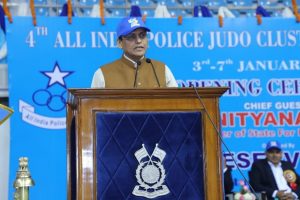 Union Minister of State for Home Affairs, inaugurating the 4th All India Police Judo Cluster Championship 2019, in New Delhi. The 4th All India Police Judo Cluster Championship organized this year by CRPF is being attended by 34 participating teams consisting of 1207 sportspersons from across the country, with a total of 15 Trophies and 214 Medals, including one Medal for the Best Gymnast, in contention. Earlier, this cluster has been organized by Sashtra Seema Bal (SSB) in 2016, West Bengal Police in 2017 and Odisha Police in 2018. Union Minister of State for Home Affairs, inaugurating the 4th All India Police Judo Cluster Championship 2019, in New Delhi. The 4th All India Police Judo Cluster Championship organized this year by CRPF is being attended by 34 participating teams consisting of 1207 sportspersons from across the country, with a total of 15 Trophies and 214 Medals, including one Medal for the Best Gymnast, in contention. Earlier, this cluster has been organized by Sashtra Seema Bal (SSB) in 2016, West Bengal Police in 2017 and Odisha Police in 2018. |
| Source: The Press Information Bureau |
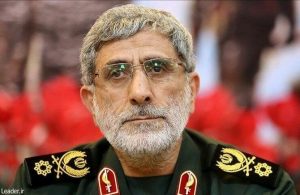 Iran’s supreme leader Ayatollah Ali Khamenei named the Deputy Head of the Revolutionary Guards’ foreign operations arm Esmail Qaani to replace Qasem Soleimani as its commander. Soleimani was killed in a pre-dawn US strike in Baghdad. Qaani was one of the most decorated commanders of the Guards during the 1980-88 Iran-Iraq war. Iran’s supreme leader Ayatollah Ali Khamenei named the Deputy Head of the Revolutionary Guards’ foreign operations arm Esmail Qaani to replace Qasem Soleimani as its commander. Soleimani was killed in a pre-dawn US strike in Baghdad. Qaani was one of the most decorated commanders of the Guards during the 1980-88 Iran-Iraq war. |
| Source: The News on AIR |
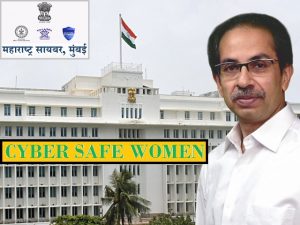 Maharashtra Government has launched a ‘Cyber Safe Women’ initiative under which awareness camps will be held across all the districts of the state regarding cyber safety. The initiative will help in educating women about how the web is used by anti-social elements and child predators to commit various types of crimes. Maharashtra Government has launched a ‘Cyber Safe Women’ initiative under which awareness camps will be held across all the districts of the state regarding cyber safety. The initiative will help in educating women about how the web is used by anti-social elements and child predators to commit various types of crimes. |
| Source: The News on AIR |
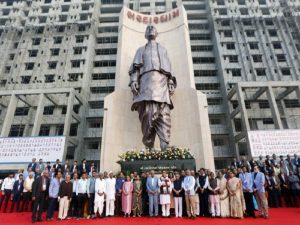 Gujarat Chief Minister Vijay Rupani unveils world’s 2nd tallest statue of Sardar Vallabhbhai Patel in the world at Ahmedabad. 50 feet tall bronze statue with a weight of 70 thousand kilograms has been unveiled at the Sardardham campus near Vaishnodevi Circle in Ahmedabad. The statue of Sardar Patel has also been designed by Padma Bhusan Ram V. Sutar, the same sculptor who had designed the Statue of Unity. Gujarat Chief Minister Vijay Rupani unveils world’s 2nd tallest statue of Sardar Vallabhbhai Patel in the world at Ahmedabad. 50 feet tall bronze statue with a weight of 70 thousand kilograms has been unveiled at the Sardardham campus near Vaishnodevi Circle in Ahmedabad. The statue of Sardar Patel has also been designed by Padma Bhusan Ram V. Sutar, the same sculptor who had designed the Statue of Unity. |
| Source: The News on AIR |
 The world Braille Day is observed annually on 4 January. World Braille Day celebrated since 2019, is observed to raise awareness of the importance of Braille as a means of communication in the full realization of the human rights for blind and partially sighted people. The day is marked remembering the birth anniversary of Louis Braille, the inventor of Braille – for people with visual disabilities. Louis Braille was born on 4th January 1809 in the town of Coupvray in northern France. The world Braille Day is observed annually on 4 January. World Braille Day celebrated since 2019, is observed to raise awareness of the importance of Braille as a means of communication in the full realization of the human rights for blind and partially sighted people. The day is marked remembering the birth anniversary of Louis Braille, the inventor of Braille – for people with visual disabilities. Louis Braille was born on 4th January 1809 in the town of Coupvray in northern France.
|
| Source: The United Nations |
You need to login to perform this action.
You will be redirected in
3 sec