
 Photosynthesis
 is derived from two words, photo + synthesis. 'Photo' means light and 'synthesis' means manufacturing, i.e. manufacturing food in the presence of light.
All green plants prepare its own food with the help of carbon dioxide and water in the presence of chlorophyll and sunlight.
Photosynthesis
Photosynthesis is derived from two words, photo + synthesis. 'Photo' means light and 'synthesis' means manufacturing, i.e. manufacturing food in the presence of light.
All green plants prepare its own food with the help of carbon dioxide and water in the presence of chlorophyll and sunlight.
 In this process solar energy is converted into chemical energy.
The function of chlorophyll is to absorb solar energy.
In this process solar energy is converted into chemical energy.
The function of chlorophyll is to absorb solar energy.
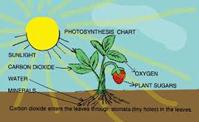 Absorption of carbon dioxide and evolution of oxygen takes place through the leaves.
Water is obtained from the soil through the roots and transported to leaves for photosynthesis. Food prepared in the leaves transported to all the parts of the plants. Both the process are carried out with the help of veins.
Absorption of carbon dioxide and evolution of oxygen takes place through the leaves.
Water is obtained from the soil through the roots and transported to leaves for photosynthesis. Food prepared in the leaves transported to all the parts of the plants. Both the process are carried out with the help of veins.
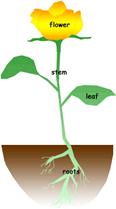 Roots absorb water from the soil
Path way of carbon dioxide and oxygen in and out of the plant body:
Roots absorb water from the soil
Path way of carbon dioxide and oxygen in and out of the plant body:
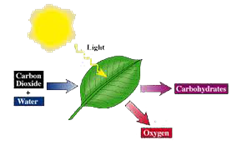 Oxygen is a byproduct in the photosynthesis process that leaves the plant body through the stomata, which is present in the leaves.
 , also enters the body through the stomata.
Mushrooms are grown in the dark places. It doesn't undergo photosynthesis process, rather it feeds on dead and decayed organic matter.
, also enters the body through the stomata.
Mushrooms are grown in the dark places. It doesn't undergo photosynthesis process, rather it feeds on dead and decayed organic matter.
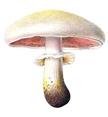 Mushroom obtains its food from dead decayed plant product
Some plants are parasitic in nature. They eat insects trapped by them. Such types of plants are called insectivorous plants, e.g. sundew, venus fly trap, pitcher plant etc.
Insectivorous plants appear very attractive as they need to attract insects. They can even trap frogs, birds etc.
Mushroom obtains its food from dead decayed plant product
Some plants are parasitic in nature. They eat insects trapped by them. Such types of plants are called insectivorous plants, e.g. sundew, venus fly trap, pitcher plant etc.
Insectivorous plants appear very attractive as they need to attract insects. They can even trap frogs, birds etc.

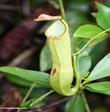
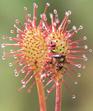 Venus fly trap Pitcher plant Sundew
Respiration in Plants
Like animals, plants also need energy; but to a little extent. Because plants don't have to move from one place to another in search of food like animals. This energy comes from the oxidation of the food prepared by leaves. Hence we can say that in the presence of oxygen food is broken down into CO2 and H2O along with the release of energy. Photosynthesis is a synthesis process and respiration is a breaking down process. Respiration is an opposite process of the process of photosynthesis.
Venus fly trap Pitcher plant Sundew
Respiration in Plants
Like animals, plants also need energy; but to a little extent. Because plants don't have to move from one place to another in search of food like animals. This energy comes from the oxidation of the food prepared by leaves. Hence we can say that in the presence of oxygen food is broken down into CO2 and H2O along with the release of energy. Photosynthesis is a synthesis process and respiration is a breaking down process. Respiration is an opposite process of the process of photosynthesis.

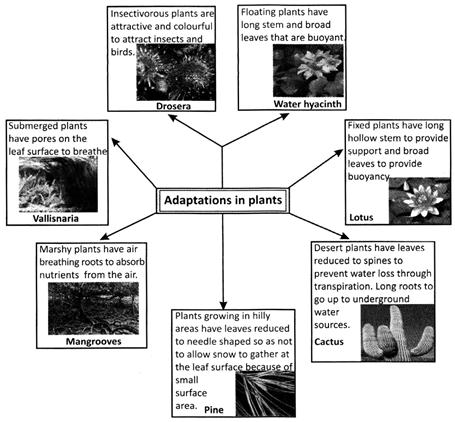
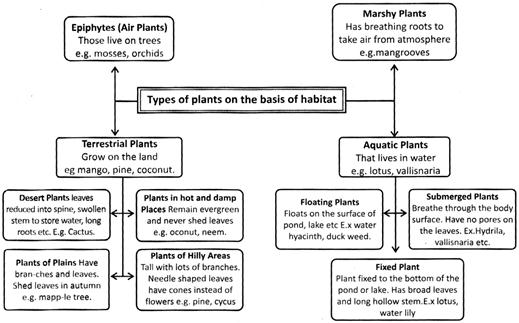 Adaptations in Various Plants
Adaptations are favorable changes that enable an organism to increase its chances of survival.
Adaptations in Various Plants
Adaptations are favorable changes that enable an organism to increase its chances of survival.
 more...
  Introduction
Wide variety of living things, from very simple algae to very complex flowering plants, exist in the plant kingdom. Plants convert useful solar energy into chemical energy of food in the process of photosynthesis. Plants are seen everywhere, even in the desert, in the aquatic medium, in the hot damp places and in very cold places. Botany is the science which deals with the study about the plants.
Plant's Classification
Introduction
Wide variety of living things, from very simple algae to very complex flowering plants, exist in the plant kingdom. Plants convert useful solar energy into chemical energy of food in the process of photosynthesis. Plants are seen everywhere, even in the desert, in the aquatic medium, in the hot damp places and in very cold places. Botany is the science which deals with the study about the plants.
Plant's Classification
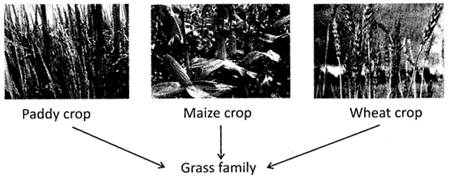
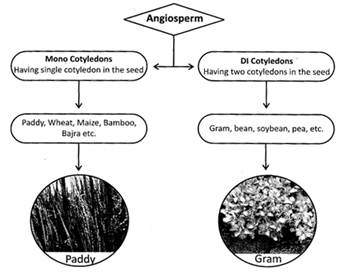
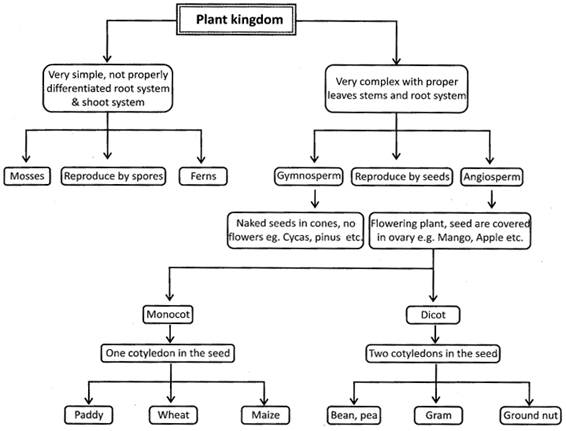 Paddy, wheat and maize are monocot plants belong to the grass family.
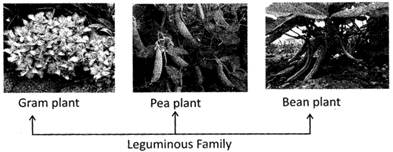
 Pea, bean, gram are dicot plants belong to the leguminous family.
 In this chapter we will study about gymnosperm and angiosperm (flowering plant).
 Gymnosperm
This group of plants bear naked seeds. Plants develop with erect stem and many branches. Male and female plants are separate. Leaves perform photosynthesis. For example, pinus, cycus, gnetum etc.
Gymnosperm
This group of plants bear naked seeds. Plants develop with erect stem and many branches. Male and female plants are separate. Leaves perform photosynthesis. For example, pinus, cycus, gnetum etc.
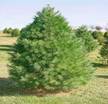
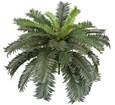
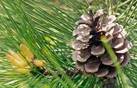 Pine tree Cycus tree Naked Seeds in Cone
Angiosperm
Angiosperm plants are highly developed. Seeds are not naked and closed inside an ovary. They have well differentiated leaves, roots and stems. Angiosperm are also called flowering plants, which are divided into two groups.
Pine tree Cycus tree Naked Seeds in Cone
Angiosperm
Angiosperm plants are highly developed. Seeds are not naked and closed inside an ovary. They have well differentiated leaves, roots and stems. Angiosperm are also called flowering plants, which are divided into two groups.
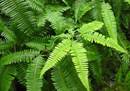
 Ferns, mosses, fungi etc. do not have flowers, rather they possess spores, which grow into a new plant.
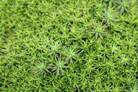
 Mosses Ferns
  Volcano
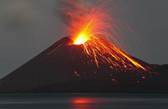
A volcano is an opening in the earth's surface which allows hot, molten rock, ash and gases to escape from below the surface. These burst out of the crust at the top or holes around the sides of the volcano through weak points. Some volcanoes are formed under the sea. When the lava cools down, the area formed looks like a new island.
The barren island is the only active volcano in the Indian subcontinent. It is located in the Andaman and Nicobar is lands.
Volcano
A volcano is an opening in the earth's surface which allows hot, molten rock, ash and gases to escape from below the surface. These burst out of the crust at the top or holes around the sides of the volcano through weak points. Some volcanoes are formed under the sea. When the lava cools down, the area formed looks like a new island.
The barren island is the only active volcano in the Indian subcontinent. It is located in the Andaman and Nicobar is lands.
 Tidal Waves
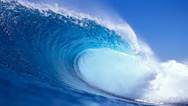
Tidal waves are called tsunami. Tsunami are caused by an undersea earthquake or by a severe hurricane or cyclone. Storm waves from the sea come rolling towards the shore then cause destruction on the seashore in seconds. If these is already high tide then the storm waves hit the land. They can cause severe damage.
Tidal Waves
Tidal waves are called tsunami. Tsunami are caused by an undersea earthquake or by a severe hurricane or cyclone. Storm waves from the sea come rolling towards the shore then cause destruction on the seashore in seconds. If these is already high tide then the storm waves hit the land. They can cause severe damage.
 Drought
 are caused by poor rain fall. Land and water bodies dry up because of severe heat. This causes acute shortage of water for agriculture and domestic use. Because of scarcity of water animals and people suffer from food and drinking water.
Drought
Drought are caused by poor rain fall. Land and water bodies dry up because of severe heat. This causes acute shortage of water for agriculture and domestic use. Because of scarcity of water animals and people suffer from food and drinking water.  Natural Calamities
Natural calamities are some disasters caused by nature which might affect our lives. Some of the natural disasters are earth quakes, volcanoes tidal waves and thought.
Natural Calamities
Natural calamities are some disasters caused by nature which might affect our lives. Some of the natural disasters are earth quakes, volcanoes tidal waves and thought.
 Earthquake
An earthquake is a sudden shaking of the ground caused by the movements or vibrations deep inside the earth.
The earth's upper layer, the crust, is made of large and small plates. The layers of the earth under the plates are hot and in a molten state because the core below is externally hot these layers under the plates are constantly moving. Such movements cause the plates to slide smoothly against each other. There movements can sometimes give rise to earthquakes.
When the ground shakes, houses, buildings and bridges shake. When it lasts for some time, roads crack, structures shatter and communication systems collapse.
Also there is loss of life and property.
Earthquakes is measured on a Richter scale
People who study earthquakes are called seismologists.
Earthquake can be detected with an instrument called a seismograph..
Earthquake
An earthquake is a sudden shaking of the ground caused by the movements or vibrations deep inside the earth.
The earth's upper layer, the crust, is made of large and small plates. The layers of the earth under the plates are hot and in a molten state because the core below is externally hot these layers under the plates are constantly moving. Such movements cause the plates to slide smoothly against each other. There movements can sometimes give rise to earthquakes.
When the ground shakes, houses, buildings and bridges shake. When it lasts for some time, roads crack, structures shatter and communication systems collapse.
Also there is loss of life and property.
Earthquakes is measured on a Richter scale
People who study earthquakes are called seismologists.
Earthquake can be detected with an instrument called a seismograph..  Introduction
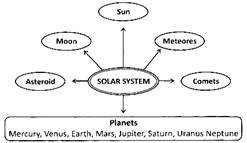
There are eight planets, which revolve around the Sun. Sun is at the centre of the solar system. Some planets in our solar system are called inner and some are outer planets. Inner and outer planets are categorized according to the distance from the Sun. In this chapter, we will study about the solar system and its components.
Our Universe
Universe is everything that exists in totality. For example stars, planets. Sun, steroids, all other celestial bodies etc. All stars and clouds are made up of hydrogen and helium.
Introduction
There are eight planets, which revolve around the Sun. Sun is at the centre of the solar system. Some planets in our solar system are called inner and some are outer planets. Inner and outer planets are categorized according to the distance from the Sun. In this chapter, we will study about the solar system and its components.
Our Universe
Universe is everything that exists in totality. For example stars, planets. Sun, steroids, all other celestial bodies etc. All stars and clouds are made up of hydrogen and helium.
 Astronomy
The branch of science that deals with the study of space Is called astronomy.
Planets
Planet is a celestial body made up of rocks, metals and gases, which revolve around a star, for example Earth, Mars, Jupiter etc. There are 8 planets in our solar system.
Star
Star is a ball of hot and bright gases.
There are billions of stars in the universe. Stars appear to twinkle from the surface of the earth.
Solar System
Solar system means the family of the Sun that is the family of 8 planets orbiting around the Sun. It also includes the moons of the planets, asteroids, meteors and comets etc.
Astronomy
The branch of science that deals with the study of space Is called astronomy.
Planets
Planet is a celestial body made up of rocks, metals and gases, which revolve around a star, for example Earth, Mars, Jupiter etc. There are 8 planets in our solar system.
Star
Star is a ball of hot and bright gases.
There are billions of stars in the universe. Stars appear to twinkle from the surface of the earth.
Solar System
Solar system means the family of the Sun that is the family of 8 planets orbiting around the Sun. It also includes the moons of the planets, asteroids, meteors and comets etc.
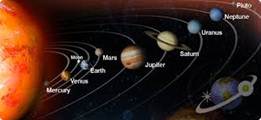 Outer planets: The inner and outer planets are differentiated according to their distance from the Sun. There are four outer planets in our solar system, these are, Jupiter, Saturn, Uranus and Neptune.
Inner planets: There are four inner planets, which are closest to the sun and revolve around the sun. These are Mercury, Venus, Earth and Mars.
Outer planets: The inner and outer planets are differentiated according to their distance from the Sun. There are four outer planets in our solar system, these are, Jupiter, Saturn, Uranus and Neptune.
Inner planets: There are four inner planets, which are closest to the sun and revolve around the sun. These are Mercury, Venus, Earth and Mars.
 Sun
Sun
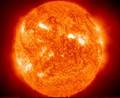 Sun is a medium sized, middle aged star and a ball of bright and hot gases. It has been burning and shining since billions of years and would continue to do so for about 10000000000 years.
The temperature of the Sun's surface is about 6'000oc and the hotness increases from the surface to the core of the Sun. The Sun has spots, which are little bit cooler than the rest part. The Sun is in the second stage of its career. It is the nearest star to the Earth, about 15 crore kilometer from us. The diameter of Sun is 110 time the earth's diameter. The Sun's light looks white but actually it's a mixture o seven colors.
Violet
Indigo
Blue
Green
Yellow
Orange
Red
Sun is a medium sized, middle aged star and a ball of bright and hot gases. It has been burning and shining since billions of years and would continue to do so for about 10000000000 years.
The temperature of the Sun's surface is about 6'000oc and the hotness increases from the surface to the core of the Sun. The Sun has spots, which are little bit cooler than the rest part. The Sun is in the second stage of its career. It is the nearest star to the Earth, about 15 crore kilometer from us. The diameter of Sun is 110 time the earth's diameter. The Sun's light looks white but actually it's a mixture o seven colors.
Violet
Indigo
Blue
Green
Yellow
Orange
Red
 Solar Eclipse
This phenomena occurs when moon (Which circles around the earth) passes directly between the earth and the more...
Solar Eclipse
This phenomena occurs when moon (Which circles around the earth) passes directly between the earth and the more...  Planets
We have studied about the planets of our solar system in previous classes. We will study only these four planets here.
Planets
We have studied about the planets of our solar system in previous classes. We will study only these four planets here.
 Mercury
It is named after the name of the messenger of the Roman gods. Mercury takes 58 days to spin on its axis and 88 days to revolve around the Sun. There is no atmosphere and water on this planet. It is covered in craters. The biggest craters on this planet is calories basin.
Mercury
It is named after the name of the messenger of the Roman gods. Mercury takes 58 days to spin on its axis and 88 days to revolve around the Sun. There is no atmosphere and water on this planet. It is covered in craters. The biggest craters on this planet is calories basin.
 Venus
Venus
 It is named after the Roman goddess of love and beauty. It is the most beautiful object in the sky. This planet was first observed by Galileo. Venus is the brightest and hottest planet, because it has atmosphere to trap the sun's light making it hottest, it is called as the morning and evening star. Venus rotates on its axis very slowly but it revolves around the sun fast and hence 1 day on Venus = 243 earth days.
But 1 year on Venus = 225 earth days. It has no moon.
Earth
It is named after the Roman goddess of love and beauty. It is the most beautiful object in the sky. This planet was first observed by Galileo. Venus is the brightest and hottest planet, because it has atmosphere to trap the sun's light making it hottest, it is called as the morning and evening star. Venus rotates on its axis very slowly but it revolves around the sun fast and hence 1 day on Venus = 243 earth days.
But 1 year on Venus = 225 earth days. It has no moon.
Earth
 The only planet in the solar system that has life. It has all the essential components of life i.e.
Appropriate warmth from the Sun;
Water, about 71 % of the surface is covered with water;
Oxygen
The first life on the earth appeared about 3 billions years ago. It is also named after Roman goddess "Terra" meaning earth. The temperature of the earth's surface is 60°c and it increases as one goes deeper and deeper.
Earth is magnetic because of the presence of molten iron in the core. The needle of the compass always points towards the magnetic north pole.
The earth rotates on its axis in approximately 23 hours, 56 minutes and 22.7 seconds. It revolves around the sun in 365 days, 6 hours, 9 minutes and 10 seconds.
Object on this planet doesn't fly off because of the force of gravity, which pulls every object towards itself.
Gravitation
Every planet in the universe attracts each other with a force proportional to their mass. The earth attracts the object when thrown upwards due to the force of gravity. The force of attraction of the earth is due to the structure of the earth’s core.
Why does all objects fall towards the earth instead of going up?
Why do we feel being pulled down when we jump?
Why it is easier to fail than to jump?
The answer lies in this fact that there is something in the earth which tries all the time to pull all the objects towards itself-
This something in the Earth is called as gravity or more...
The only planet in the solar system that has life. It has all the essential components of life i.e.
Appropriate warmth from the Sun;
Water, about 71 % of the surface is covered with water;
Oxygen
The first life on the earth appeared about 3 billions years ago. It is also named after Roman goddess "Terra" meaning earth. The temperature of the earth's surface is 60°c and it increases as one goes deeper and deeper.
Earth is magnetic because of the presence of molten iron in the core. The needle of the compass always points towards the magnetic north pole.
The earth rotates on its axis in approximately 23 hours, 56 minutes and 22.7 seconds. It revolves around the sun in 365 days, 6 hours, 9 minutes and 10 seconds.
Object on this planet doesn't fly off because of the force of gravity, which pulls every object towards itself.
Gravitation
Every planet in the universe attracts each other with a force proportional to their mass. The earth attracts the object when thrown upwards due to the force of gravity. The force of attraction of the earth is due to the structure of the earth’s core.
Why does all objects fall towards the earth instead of going up?
Why do we feel being pulled down when we jump?
Why it is easier to fail than to jump?
The answer lies in this fact that there is something in the earth which tries all the time to pull all the objects towards itself-
This something in the Earth is called as gravity or more...  Other Heavenly Bodies
 Asteroid
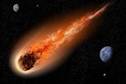 Large number of small bodies that fills the gap between the orbits of the Mars and Jupiter and revolve around the Sun like other planets. Asteroids are called as minor planets because it has its own orbit and its size varies from kilometer to few hundred kilometers. About 3500 asteroids are orbiting the Sun.
Comets
Large number of small bodies that fills the gap between the orbits of the Mars and Jupiter and revolve around the Sun like other planets. Asteroids are called as minor planets because it has its own orbit and its size varies from kilometer to few hundred kilometers. About 3500 asteroids are orbiting the Sun.
Comets
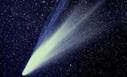 They are very small sized celestial bodies made up of balls of ice and rock and revolve around the Sun. They become visible to us only when come closer to the Earth. They usually have a small head and a glowing tail of gas. The size of the tail increases as it approaches the Sun. Tail disappears as it moves away from the Sun. Halley's comet appears after nearly 76 years, last time it was seen in 1986-
Meteors and Meteorites
They are very small sized celestial bodies made up of balls of ice and rock and revolve around the Sun. They become visible to us only when come closer to the Earth. They usually have a small head and a glowing tail of gas. The size of the tail increases as it approaches the Sun. Tail disappears as it moves away from the Sun. Halley's comet appears after nearly 76 years, last time it was seen in 1986-
Meteors and Meteorites
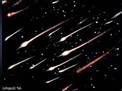 Meteor is called a shooting star. it is small stone like objects revolving around the Sun. Its presence can be felt only when it enters the earth's atmosphere
Because of too much heat production meteors start to glow, and get: evaporated within a short time.
Meteorites are part of large meteors, that reaches the surface before they gets evaporated.
Meteor is called a shooting star. it is small stone like objects revolving around the Sun. Its presence can be felt only when it enters the earth's atmosphere
Because of too much heat production meteors start to glow, and get: evaporated within a short time.
Meteorites are part of large meteors, that reaches the surface before they gets evaporated.

 Which one of the following statements is correct?
(a) Asteroids are the part of our solar system
(b) Asteroids are not the part of our solar system
(c) Asteroids are the satellites of planet saturn
(d) Asteroids are the satellites of planet venus
(e) None of these
Answer: (a)
Explanation
Asteroids are the part of our solar system. Therefore, option (A) is correct and rest of the options is incorrect,
Which one of the following statements is correct about comet?
(a) Comet revolves around the sun
(b) Comet is a part of our solar system
(c) A comet has many moon
(d) Both A and B
(e) None of these
Answer: (d)
Explanation
Comets are part of our solar system which revolves around the sun. Therefore, option (D) is correct and rest of the options is incorrect.
Constellation
Which one of the following statements is correct?
(a) Asteroids are the part of our solar system
(b) Asteroids are not the part of our solar system
(c) Asteroids are the satellites of planet saturn
(d) Asteroids are the satellites of planet venus
(e) None of these
Answer: (a)
Explanation
Asteroids are the part of our solar system. Therefore, option (A) is correct and rest of the options is incorrect,
Which one of the following statements is correct about comet?
(a) Comet revolves around the sun
(b) Comet is a part of our solar system
(c) A comet has many moon
(d) Both A and B
(e) None of these
Answer: (d)
Explanation
Comets are part of our solar system which revolves around the sun. Therefore, option (D) is correct and rest of the options is incorrect.
Constellation
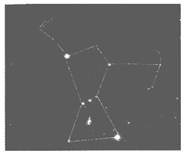 If we see night sky, we find certain patterns of stars resembling living creatures or inanimate objects. Such groups of stars are called as constellation. Each constellation is named after their resemblance more...
  Reproduction
 is the process of producing offspring of its own kind. For example an apple tree can produce another apple tree only, it can't produce mango tree.
Reproduction
Reproduction is the process of producing offspring of its own kind. For example an apple tree can produce another apple tree only, it can't produce mango tree.
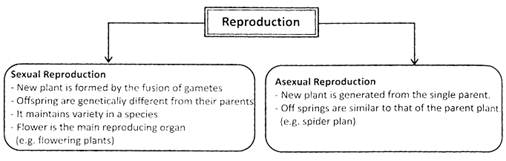 Vegetative reproduction is a type of asexual reproduction in which new plant is generated from the vegetative part of the plants i.e. stems, roots, leaves etc.

 Vegetative reproduction by Stem
Runnerss
Vegetative reproduction by Stem
Runnerss
 Reproduction in strawberry
Stems, which run horizontally parallel to the ground. New roots emerge from the nodes, thus gives rise to new plants e.g. lawn grass, strawberries etc.
Suckers
Reproduction in strawberry
Stems, which run horizontally parallel to the ground. New roots emerge from the nodes, thus gives rise to new plants e.g. lawn grass, strawberries etc.
Suckers
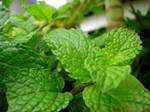 Vegetative reproduction in mint
The reproduction is very similar to runners but have shorter internodes, e.g. mints, chrysanthemum.
Vegetative reproduction in mint
The reproduction is very similar to runners but have shorter internodes, e.g. mints, chrysanthemum.
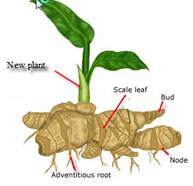 Reproduction in ginger by rhizome
It has underground nodes and internodes. Axillary buds are present on the nodes, which develop into new plants on getting favorable conditions, e.g. ginger.
Tuber
Reproduction in ginger by rhizome
It has underground nodes and internodes. Axillary buds are present on the nodes, which develop into new plants on getting favorable conditions, e.g. ginger.
Tuber
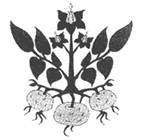 Vegetative reproduction in potato
Potato is a tuber that has bud, which is capable of producing new plant.
Corn
Corm is a condensed form of rhizome, which is formed vertically in the ground. A single corm develops new plant e.g. colocasia
Vegetative reproduction in potato
Potato is a tuber that has bud, which is capable of producing new plant.
Corn
Corm is a condensed form of rhizome, which is formed vertically in the ground. A single corm develops new plant e.g. colocasia
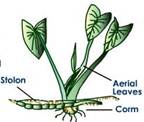 Reproduction in colocasia
Bulbs
Reproduction in colocasia
Bulbs
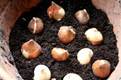 A type of plants which has bulbs for the storage of food for helping them in non favorable condition. The bud in the plants grows into new plants, e.g. onion, lily, etc,
Vegetative Reproduction by Leaf
A type of plants which has bulbs for the storage of food for helping them in non favorable condition. The bud in the plants grows into new plants, e.g. onion, lily, etc,
Vegetative Reproduction by Leaf
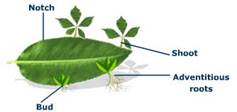 Adventitious Buds
Buds present on the margin of leaves, which develops into new plants on getting the favorable condition.
Vegetative Reproduction by Roots
Vegetative reproduction in a plant is the asexual reproduction. Tuberous roots of sweet potato and dahlia when get detached from the plant grow into new plant.
Adventitious Buds
Buds present on the margin of leaves, which develops into new plants on getting the favorable condition.
Vegetative Reproduction by Roots
Vegetative reproduction in a plant is the asexual reproduction. Tuberous roots of sweet potato and dahlia when get detached from the plant grow into new plant.
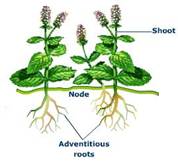 Vegetative reproduction by roots
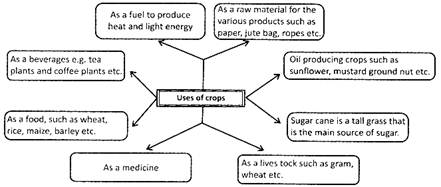
 Uses of crops
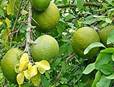
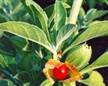
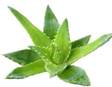
 Medicinal plants
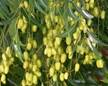 more...
  Introduction
Everything around us is the component of our environment. The components of our environment affect on our health and day to day life. We get disease in the polluted environment and a good environment makes us healthy. The polluting elements in our environment are called pollutants. In this chapter, we will study about the pollutants in our environment and method by which we can eliminate these pollutants.
Pollution
Human activities lead to the production of waste materials that had deteriorated our environment and make them unsuitable for the life. Unwanted and undesirable substances present in air, water and soil are called as pollutant. For example. Sulphur dioxide, Nitrogen oxides, Lead oxides. Hydrocarbons, Fly ashes, Smoke, Dust particles etc.
On the basis of the contaminated source, pollution can be broadly classified into the following types:
Introduction
Everything around us is the component of our environment. The components of our environment affect on our health and day to day life. We get disease in the polluted environment and a good environment makes us healthy. The polluting elements in our environment are called pollutants. In this chapter, we will study about the pollutants in our environment and method by which we can eliminate these pollutants.
Pollution
Human activities lead to the production of waste materials that had deteriorated our environment and make them unsuitable for the life. Unwanted and undesirable substances present in air, water and soil are called as pollutant. For example. Sulphur dioxide, Nitrogen oxides, Lead oxides. Hydrocarbons, Fly ashes, Smoke, Dust particles etc.
On the basis of the contaminated source, pollution can be broadly classified into the following types:
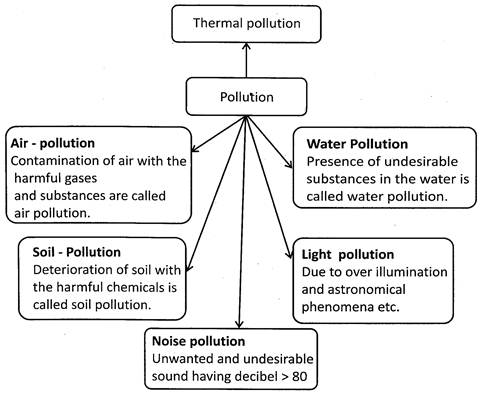 Let us study in detail about the causes, consequences and preventive measures of these pollutions.
  Air Pollution
Overpopulation, industrialization, modern life style and advancement in science technology has lead to the thoughtless use of natural resources, which in turn spoil air for other activities. This is called air pollution.
Look at the following picture of the causes of air pollution
Air Pollution
Overpopulation, industrialization, modern life style and advancement in science technology has lead to the thoughtless use of natural resources, which in turn spoil air for other activities. This is called air pollution.
Look at the following picture of the causes of air pollution
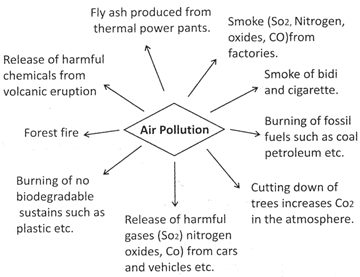
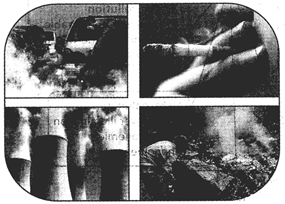 Look at the following picture of the causes of air pollution
 Deforestation is one of the big causes of air pollution. Trees are the natural air purifier. Deforestation increase the concentration of carbon dioxide in the air and thereby pollutes it.
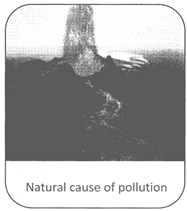 Eruption of ash from the volcano causes air pollution. Concentration of carbondioxide, hydrogen chloride and sulfur dioxide increases due to the eruption from volcano
.
Eruption of ash from the volcano causes air pollution. Concentration of carbondioxide, hydrogen chloride and sulfur dioxide increases due to the eruption from volcano
. 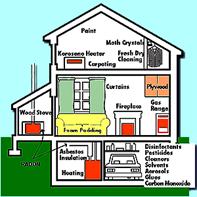 Indoor pollutants which are responsible for the air pollution, given in the picture above. We can minimize the pollution by using non polluting elements instead of the given elements.
Consequences of Air Pollution
Indoor pollutants which are responsible for the air pollution, given in the picture above. We can minimize the pollution by using non polluting elements instead of the given elements.
Consequences of Air Pollution

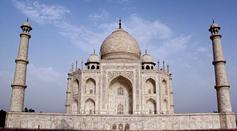
 Taj mahal is corroded due to acid rain Hole in the ozone layer
Taj mahal is corroded due to acid rain and hole in the ozone layer, which allows harmful ultra violet radiations to pass through it are the consequences of air pollution.
Taj mahal is corroded due to acid rain Hole in the ozone layer
Taj mahal is corroded due to acid rain and hole in the ozone layer, which allows harmful ultra violet radiations to pass through it are the consequences of air pollution.
 Air Pollution Causes Diseases
Pollution can cause itching and irritation to eyes, skin, nose, throat and the respiratory tract.
Air Pollution Causes Diseases
Pollution can cause itching and irritation to eyes, skin, nose, throat and the respiratory tract.
 Pollution causes itching in eyes
Many respiratory problems Asthma, Bronchitis occur due to inhalation of poisonous gases.
Pollution causes itching in eyes
Many respiratory problems Asthma, Bronchitis occur due to inhalation of poisonous gases.
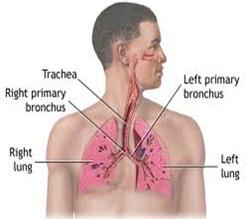 Respiratory problems
Pollution is injurious to plant or other animal also.
Polluted air can damage lungs.
It reduces visibility because of the presence of smoke, dust and vapors.
Pollution can damage our nervous system and digestive system.
Pollution can cause cancer and neurological disorder.
How to Minimize Air Pollution
Look at the following chart to understand the method by which, we can minimize the air pollution:
Respiratory problems
Pollution is injurious to plant or other animal also.
Polluted air can damage lungs.
It reduces visibility because of the presence of smoke, dust and vapors.
Pollution can damage our nervous system and digestive system.
Pollution can cause cancer and neurological disorder.
How to Minimize Air Pollution
Look at the following chart to understand the method by which, we can minimize the air pollution: 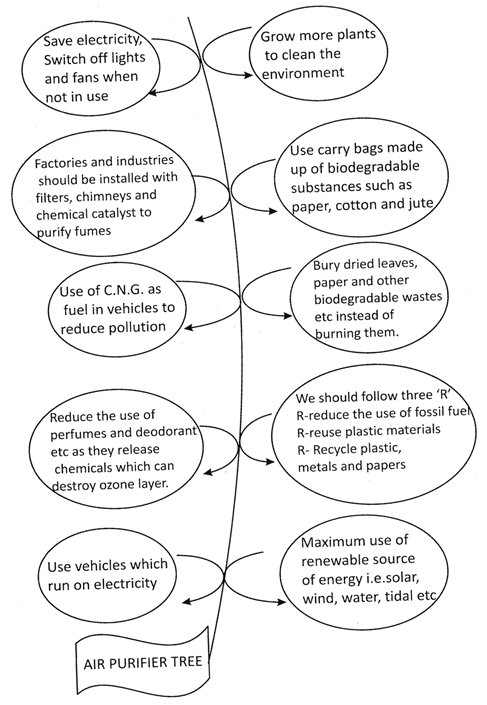
 Use electric vehicle to reduce release of harmful gases in the air
 CNG bus ? an eco-friendly bus
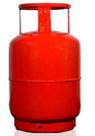 Government has encouraged people to use LPG over coal and fire wood for cooking purposes as it improves air quality and more...
You need to login to perform this action.
You will be redirected in
3 sec